
Wine Scanner AI


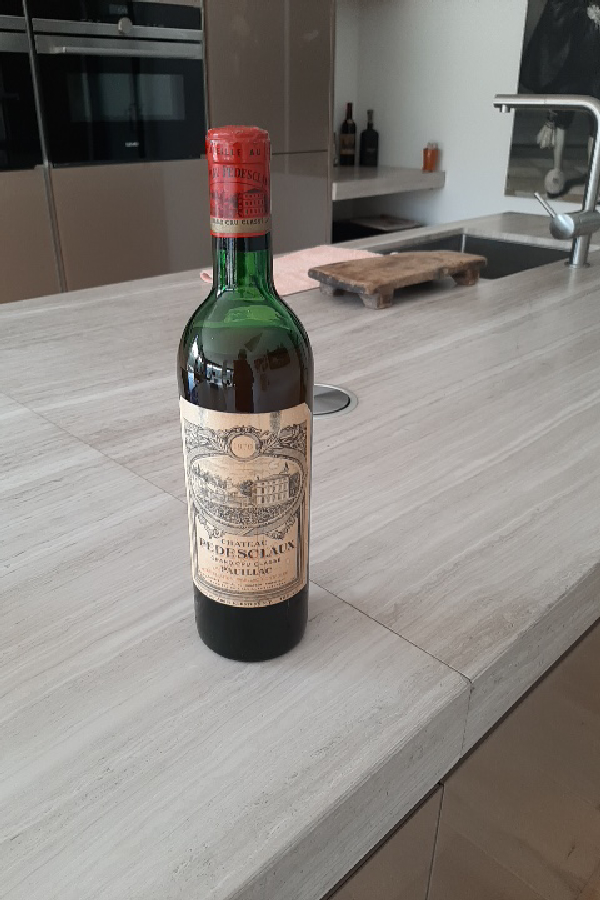
Red wine | Pauillac, Bordeaux, France
See all comments, ratings, and join the community discussion in the Wine Scanner AI app!
The 1970 vintage of Château Pédesclaux is a remarkable artifact of Pauillac history. As a Fifth Growth (Cinquième Grand Cru Classé) from the legendary 1970 Bordeaux harvest, this wine represents a classic, mature expression of the Left Bank. While the estate has seen significant modernization and a dramatic shift toward Cabernet Sauvignon in the 21st century under the stewardship of the Lorenzetti family, this 1970 bottling captures the more traditional, Merlot-influenced style of the mid-20th century.
Upon opening, this wine serves as a masterclass in aged Bordeaux. It requires careful handling; the sediment should be allowed to settle, and the cork—likely fragile—should be extracted with a two-pronged opener (like a Durand). A decanting period of about an hour is recommended, not necessarily for heavy aeration, but to cleanly separate the wine from its fine, decades-old sediment. On the nose, it offers the quintessential mature Pauillac profile: evocative notes of cedar, graphite (lead pencil), forest floor, and dried black currants. On the palate, it is elegant and fully resolved, with silky, softened tannins and a lingering, nuanced finish that speaks to the excellent conditions of the 1970 growing season.
This wine is a perfect centerpiece for a connoisseur's dinner. Due to its age, it pairs beautifully with dishes that have earthy, umami profiles and aren't overwhelmed by heavy spice. Think of classic preparations such as roast rack of lamb with rosemary, slow-braised beef cheeks, or a wild mushroom risotto. It also pairs wonderfully with aged hard cheeses like Comté or a mature Mimolette.
Acquiring a bottle of 1970 Pédesclaux is not just purchasing a wine; it is acquiring a piece of history. It offers a rare, privileged window into the past—a chance to experience how a classified Pauillac evolves over half a century. It is best enjoyed in good company, allowing the wine time in the glass to reveal its shifting layers of complexity. While it is a privilege to drink such an aged bottle, one should approach it with the expectation of a 'classic' vintage—graceful, tertiary, and deeply intellectual, rather than powerful and primary. This is a wine that rewards patience and curiosity.