
Wine Scanner AI


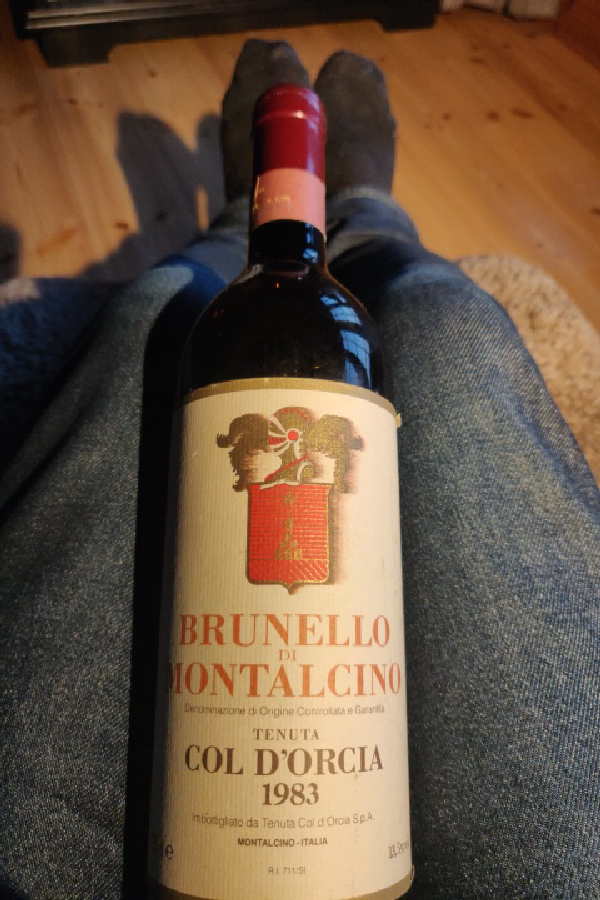
Red wine | Montalcino, Tuscany, Italy
See all comments, ratings, and join the community discussion in the Wine Scanner AI app!
Holding a bottle of 1974 Tenuta Col d'Orcia Brunello di Montalcino is like holding a piece of Tuscan history. This wine hails from a legendary era when the Brunello designation was still in its relative youth—Brunello di Montalcino was officially awarded its DOC status in 1968, and this bottle represents one of the early vintages produced by the estate shortly after the Marone Cinzano family acquired the property in 1974.
This is not merely a wine; it is a time capsule. Made from 100% Sangiovese Grosso, the quintessential grape of the Montalcino region, the 1974 vintage has evolved over five decades, shedding its youthful exuberance for the profound complexity only time can provide. Expect a nose dominated by tertiary aromas: dried cherries, forest floor, cured leather, and a hint of dried herbs and tobacco. On the palate, the wine will feel delicate yet structured, with softened tannins and a persistent, ethereal finish that speaks to the specific terroir of the southern Montalcino slopes.
Why choose this wine? Because it offers an authentic, rare glimpse into the evolution of one of Italy’s most prestigious appellations. It is a testament to the longevity of Sangiovese when grown in the ideal conditions of the Orcia Valley. Because of its age, this wine requires a gentle hand; it should be stood upright for a day to allow sediment to settle and decanted carefully—or simply opened and allowed to breathe in the glass for at least an hour—to allow its dormant aromas to bloom.
Pairing this wine is an exercise in restraint and elegance. It demands dishes that respect its age rather than overpower it. A classic Bistecca alla Fiorentina is too aggressive; instead, consider a slow-braised wild boar ragù (cinghiale) over hand-cut pappardelle, or simply aged Pecorino Toscano and a rustic loaf of crusty bread. This is a wine for quiet contemplation, best enjoyed with close friends who appreciate the fleeting beauty of a mature, historic red. This isn't just drinking; it's a shared experience of the past.